Self paced courses
Because so many people have shared how useful these courses are, I am now offering some of these courses at no cost to you. If cost is a barrier for the others, please email and let me know.
Please feel free to share these resources to those who may need access to affordable healing.
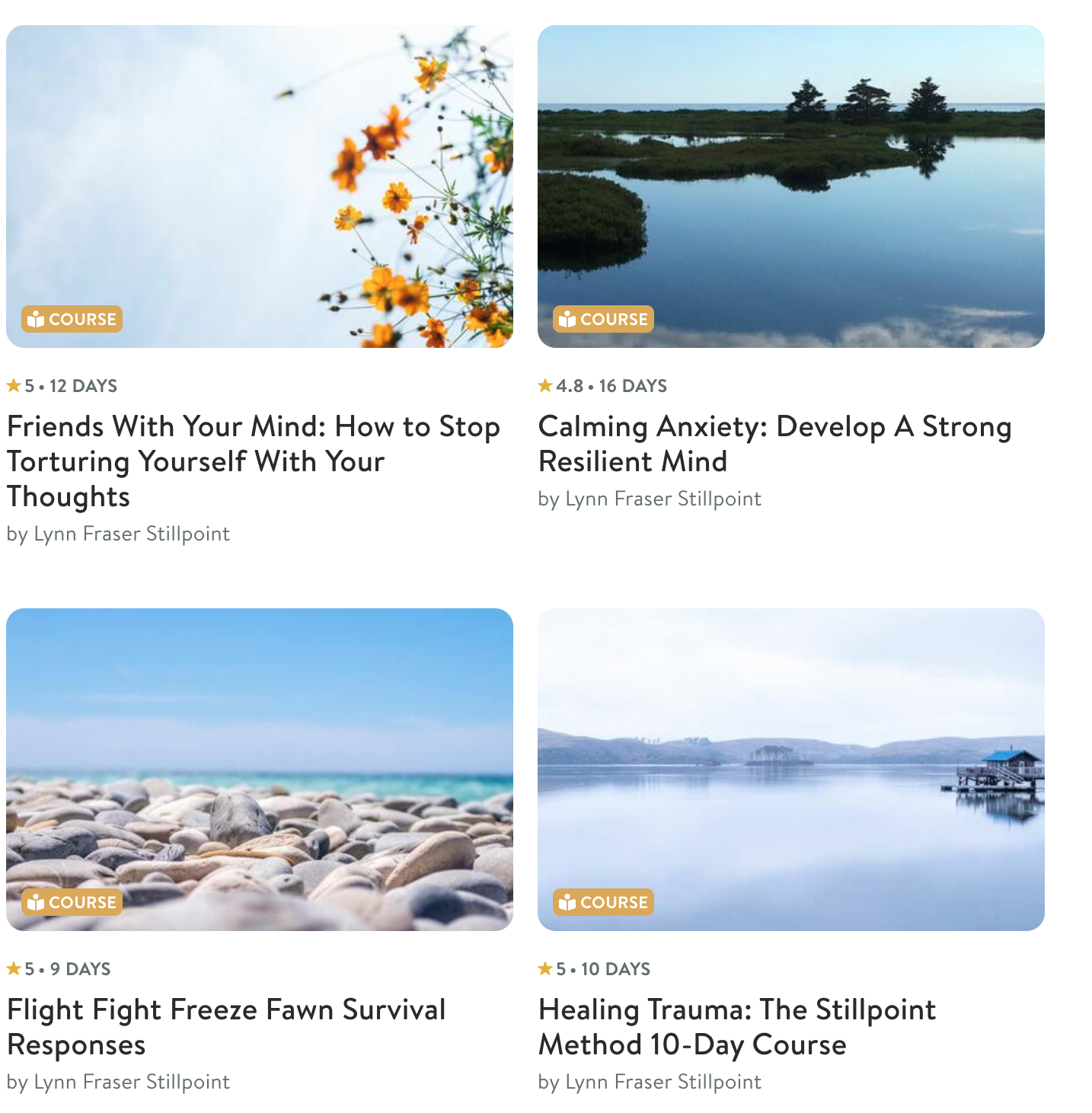

Nourish: Food and Eating,
a self paced course
Most of us carry something around for food. A list of good and bad foods, a set of rules we never chose, or shame that follows us to the table, whatever our size or history. This course is a gentle place to set some of that down.
Safety is the ground for nourishing ourselves. When we're stressed or rushing, our body can't digest well, and it's hard to feel at ease with food. We start there, in our body, and we go slowly. Across nine lessons, we move from understanding how stress gets in our way, into simple practices for pausing before a meal, through the harder territory of shame and the inner critic, and out toward comfort and ease. We work gently, and there's never any pressure to change a thing. Our relationship with food, eating, and our body is built up over a whole lifetime, and we can take our time unwinding it with compassion.
-
You will learn why safety is the ground for nourishing yourself, and why your body cannot digest well when you are stressed or rushing. When we are braced for threat, blood moves to the arms and legs so we can fight or flee, and digestion struggles.
Where your food rules came from. Most of them arrived early, from family and from culture, and many of us are still following them without having chosen them.
What the research shows about shame. Shaming never helps us change. It sends us into collapse, activates our survival responses, and increases our need for comfort, which often sends us back toward food.
Separate what belongs to your personal life from what belongs to the system we live in, and from what belongs to your genetics. Good food is expensive. Cheap food is high in fat, salt, and sugar. The culture is hurried and it shames bodies. Carrying all of that as personal failure is a heavy and inaccurate load.
The goal behind control is safety, and that safety can be approached directly. How comfort eating became an adaptive response, and why that deserves compassion rather than judgment.
-
Practices:
Settling your body before a meal. Look around for actual danger, find none, and let the bracing go so you can eat from a more relaxed state.
Two short pauses. The first is checking whether you are physically hungry. The second is gratitude, in whatever form is true for you.
A reverse inquiry, saying "this food nourishes me" and noticing what objections rise in response. Hidden beliefs show themselves this way.
Cyclic sighing, a deep double inhale through the nose and a long slow exhale, and then listening in three places: what your mind says, what your heart knows, and what your gut senses.
Meeting your inner critic. Name it when it starts, and decline to listen to that tone about your food.
Readying a sentence for people who comment on what you eat, and the internal version for when speaking is not possible or not wise.
Bringing your younger self into your heart and offering the words you needed to hear then.
Enjoying your food. Colour, smell, texture, taste. Letting yourself be comforted.
Strong Mind Resilient Nervous System, a self paced course
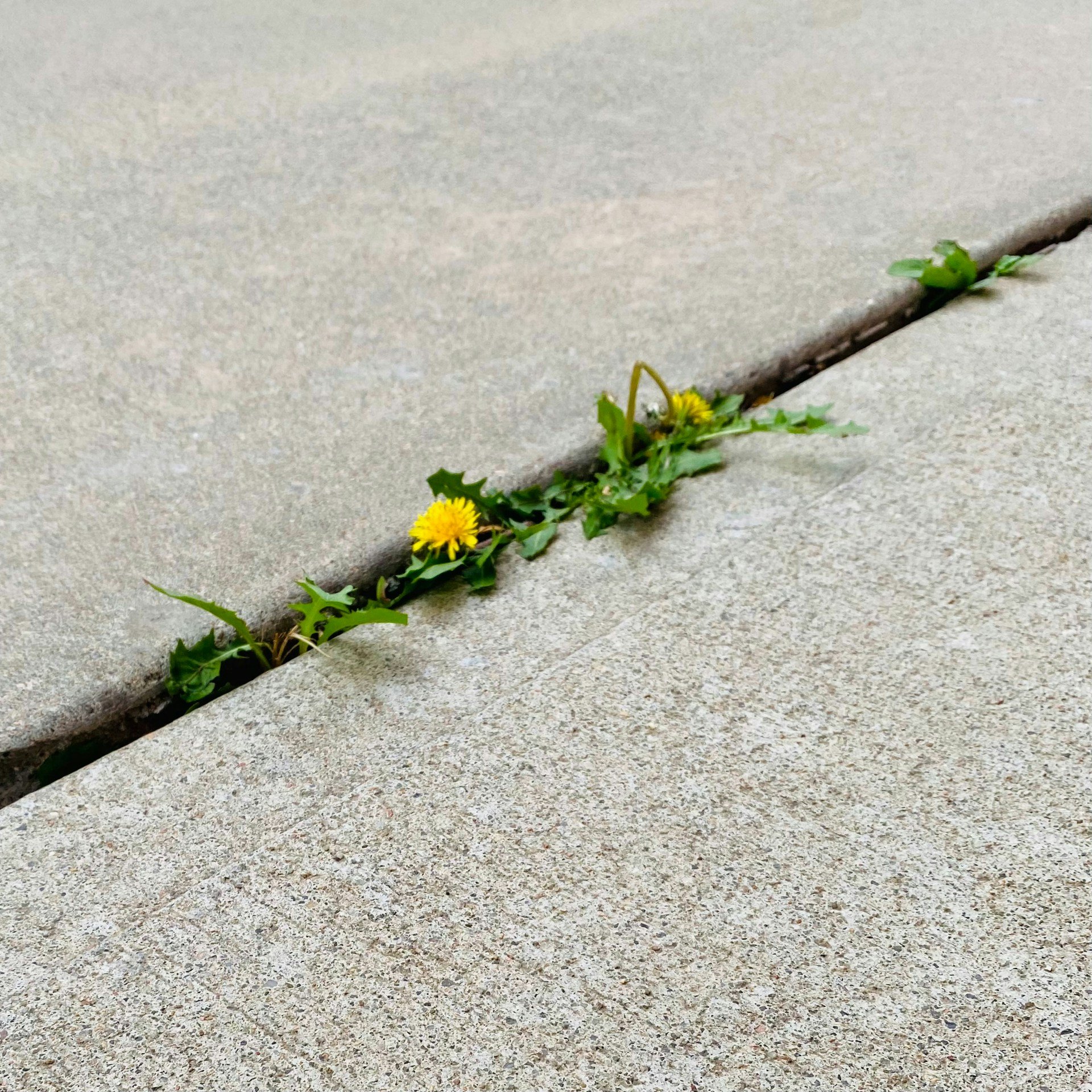
Thank you for saying yes to this exploration of strength and resilience. We’ll work together to expand your understanding and build many types of strength. As we cope with anxiety and fear and as we face life's challenges, we need a strong inner foundation that includes rest, joy, connection, emotional honesty, and deep self-trust.
Each lesson explores a different dimension of resilience: honoring our changing capacity, reconnecting to rest, finding joy, and remembering that strength comes in many forms - the strength to slow down, the strength to heal, and the strength to stay connected. We release outdated ideas about what it means to be "strong enough" and root ourselves in truth, tenderness, and hope. Our format each week blends information and somatic inquiry. Please take your time as you move through the lessons, repeat inquiries that invite you to explore more deeply, and pause the recording when you would like to spend more time with something. Resilience isn't something we achieve. It is a relationship with our bodies, our hearts, our communities, and with life itself.
-
You will learn that strength is broader than you were taught. Physical endurance and stoicism are part of it. So are emotional honesty, presence, authenticity, and compassion. The strength to slow down, to be true to yourself, and to stay connected when it is hard belongs on the list too.
How your nervous system works. When we feel in danger we move into a survival response, and fight, flight, freeze, and fawn are the familiar ways we try to keep ourselves safer. You will learn to recognize which one you go to.
The negativity bias, which gives more weight to past experiences of danger and harm, many of which happened to us as children. That bias makes our nervous system inaccurate about the present.
Recognize core deficiency beliefs, catastrophic thinking, and self-shaming as they arise, so you are less often swept away by them.
How your capacity shifts with age, health, and life circumstance, and how to meet that with kindness rather than judgment.
Why rest is not a reward you earn. Exhaustion is not a normal way of living, and rest is generative.
To draw on joy and connection as real resources.
-
Practices:
The frame trace. You put a limiting belief in a frame on the other side of the room, then trace your eyes around the empty space outside it.
Confident posture. You stand, feel the soles of your feet on the floor, and let your shoulders relax. I am here. I am grounded. I am steady.
Opening your hands. You put what you are holding into your fists, then open them. I am letting that go. What might I invite in?
Orienting, looking around your environment without words, noticing that there is nothing immediately harmful here.
Shaking and moving, standing up to shake, making some big stretches happen, and moving your lower jaw around.
Ten minutes of daydreaming, with no particular meditation or breathing technique.
Mantra soham, inhaling so and exhaling hum, letting it take you into stillness.
Witnessing, placing awareness behind your head to watch your thoughts, then behind your heart centre, then your navel centre.
Grounding and expanding, putting your roots into the ground and up into the sky, letting yourself be nourished by your breath.
Breathing, shaking, and dancing to a song you love, then noticing your body, your energy, and your mood afterward.
Living In Our Body: Somatic Mindfulness, a self paced course
This series of lessons contains reflection questions and guided practices as a way to support yourself in ongoing somatic mindfulness inquiry. The course is organized into educational components followed by somatic inquiry.

-
The first ten lessons work with building a strong, resilient, well-regulated nervous system.
The last six work with common daily life issues like setting boundaries, the anxious eagerness of a parentified child, and forming adult low-vigilance relationships.
As you complete the course, you will be more present in your own body, and familiar with its energies and feelings. As we have the experience of being grounded in the safety of the present moment, we develop confidence we can bring ourselves back into steadiness and self-regulation.
We realize we are not helpless in the face of compelling thoughts generated by hypervigilance in our nervous system.
We cultivate being open hearted with ourselves with compassion as an ongoing practice of connection.
We experience greater agency and enjoyment in life.
-
Ordinary trauma and crisis trauma are both stored in our body as sensations and energy with associated memories and thoughts. Somatic inquiry is when we tune in and listen to the sensations and energy in our body.
Most of the disturbing thoughts in our mind are generated by hypervigilance in our nervous system which generates catastrophic thinking.
In this course we practice powerful tools like tapping, frame/tracing, and taking a different perspective with thoughts and sensations.
We lessen the intensity of compulsive thoughts and begin to rewire our neural networks for connection and safety.
Friends With Your Mind
Practice powerful somatic mindfulness tools to both work effectively with compulsive thinking and to access your own kindness and wisdom.
A hypervigilant nervous system generates most of our catastrophic thought. Learn tools to break the trance of compulsive thinking, become familiar with sensations and energy in your body that make thoughts feel more real, and cultivate patience and kindness. We learn to signal safety to our nervous system through smooth, diaphragmatic breath, softening our body, and calming our mind.

-
Trauma, Neuroception, and Survival Responses
Sensations And Energy In Our Body
Core Deficiency Beliefs
Thoughts, Breath, and Nervous System Regulation
Catastrophic and Ruminating Thoughts
Releasing Toxic Shame
-
Witness and Work With Thoughts
Guided Somatic Practice For Regulating Your Nervous System
Somatic Inquiry: I Am Friends With My Mind
Regulating, Orienting, and Grounding Practices
Somatic Inquiry: Working With Thoughts
Welcoming Our Younger Self
Fight/Flight/Freeze/Fawn a self paced course to learn how we unconsciously assess threat and how our nervous system responds to keep us safe.

-
Neuroception - how we unconsciously assess danger and safety through our past experience
The polyvagal ladder of dorsal (freeze) then coming up into sympathetic arousal (fight/flight) then into ventral vagal (calm and connected)
Freeze - hunkered down for safety
Fight- fiery explosive energy different from anger
Flight - restless need to escape and avoid
Fawning and people pleasing - a social engagement strategy
-
4 somatic mindfulness inquiries
Coming out of freeze
Feeling anger instead of fight response
Staying with uncomfortable feelings
Stop shaming ourselves for sucking up
More resources & guided practices
Breathe, a self paced course to learn about diaphragmatic breathing practices vital for your health and well-being.

-
Why work with your breath
Healthy natural breathing
Emotions and breath
Breathing diaphragmatically
Nostril breathing
Even length of inhale/exhale
4 qualities of breath
-
Diaphragmatic breathing in shavasana (resting on your back)
Diaphragmatic breathing in crocodile (on your front)
Relax forehead and let go of worry
Breathe and relax in shavasana
A quick reset for panic/anxiety
Alternate nostril breathing
Breathe into stillness

Calming Anxiety, a self paced course to develop a healthy mind and body.
-
We will cover topics such as:
The toll anxiety takes
Root causes of anxiety
Kindness and compassion
We feel anxiety in our body
Breath as a cue and to soothe
Anxious intrusive thoughts
Catastrophic thoughts
What does the sensation mean?
Inquiry into thoughts & sensation
Unhealthy coping
PTSD Post Traumatic Stress
-
Accurate perception of threat
Social anxiety at a gathering
Emotional flooding
Fear of a panic attack
Fear of flying
Other people feel like a threat
Global catastrophe
-
1) Develop a healthy, strong, resilient mind and body
2) Practice effective, science-backed mindfulness practices to calm your nervous system
3) Self-regulate emotions
4) Enjoy a happier life
5) Emotional co-regulation
6) Deep acceptance
-
This course may be for you if you feel the grey half-life of low level anxiety or you might be experiencing extreme anxiety or PTSD. You might be on medication. The understanding and practices in this course will support you and are complementary to other treatments.
This course is for you if:
1) You are sick of being stressed out and being hijacked by the past
2) You want to know how you got here and how you can help yourself
3) You are willing to try simple proven techniques and tools.
Stillpoint Method for Healing Trauma, a 10 day self paced course with powerful practical tools for everyday life.

-
“The effect of trauma is that we disconnect from ourselves, our sense of value, and the present moment.” Dr Gabor Maté
Through this ten day course, you will see how our childhood experiences affect the development of our brain and nervous system, and the long term effect of that throughout our adult lives. We learn simple, powerful practices to build strength and resilience long term and to emotionally down-regulate when we are stressed.
Trauma is stored in our body as sensations and energy along with associated thoughts and memories. We practice three ways to lessen their intensity so we can remain grounded in the present moment. You will be able to identify when you are emotionally flooded and common trauma responses of fight/flight/freeze: anger and lashing out; denial and numbing out.
We cover why we turn against ourselves, develop false core deficiency beliefs like feeling unworthy or unlovable, and how to heal with kindness and compassion.
-
Day 1: Trauma Basics
Day 2: Emergency Practices
Day 3: Torturing Thoughts
Day 4: Energy and Sensations
Day 5: Lashing Out
Day 6: Numbing Out
Day 7: Turning Against Ourselves
Day 8: Compassion & Kindness
Day 9: Relationships
Day 10: Resilience

When Crisis Hits, a self paced course that helps you understand what happens in your body, brain and nervous system after a shock.
-
A moment in which life changes
What happens to us
Healing is somatic (in our body)
Emotions, feelings, sensations
Tools, practices
Post traumatic growth
-
Feelings, energies, sensations
Breathing for panic & anxiety
Stop catastrophic thinking
Relax your nervous system
What does the heart know?